You’ve vacuumed the couch. The crumbs are gone, but pale hairs still catch the light across the seat cushion.
To remove pet hair from a fabric couch, a rubber glove can help gather the strands that remain into little clumps you can lift away. Both Dyson’s sofa-care advice and Vileda’s pet-cleaning guide describe this technique. Start with one small area and gentle pressure.
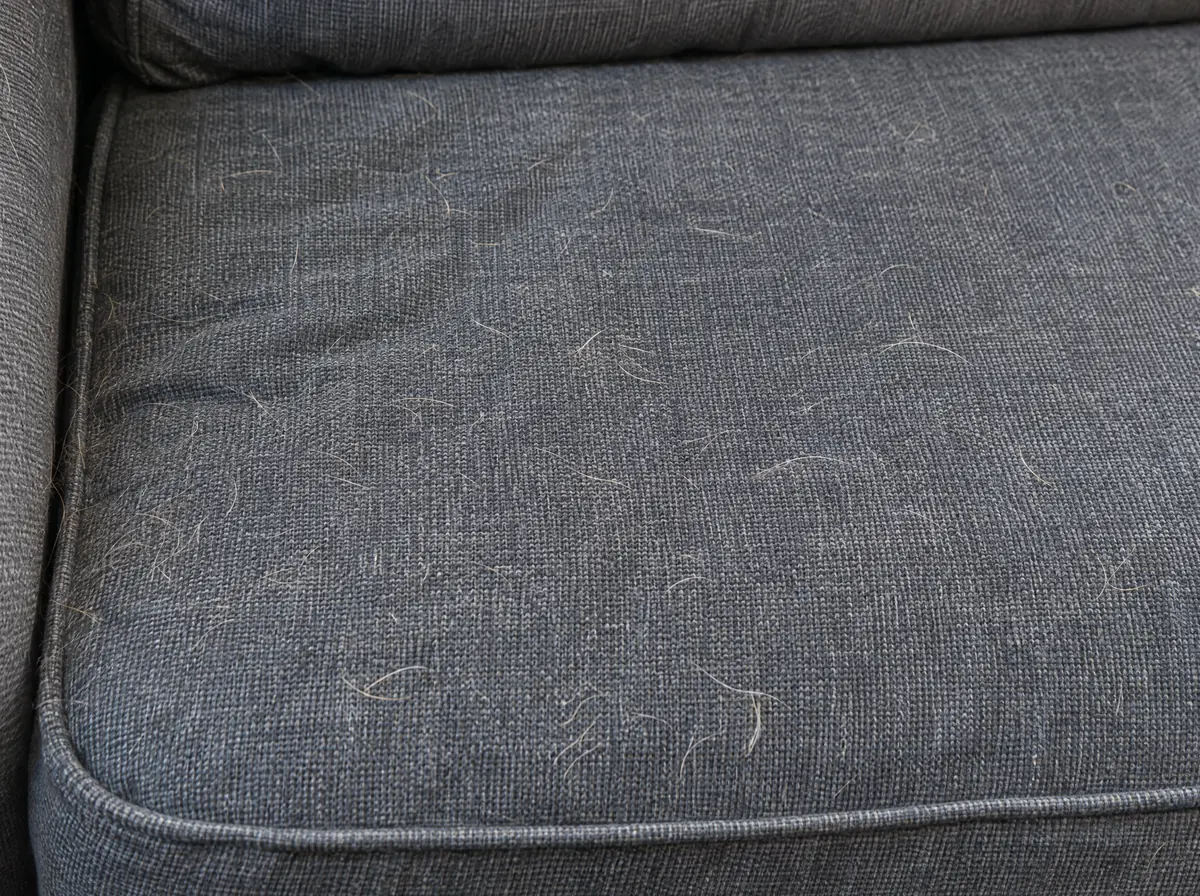
Check the fabric first
Read the sofa’s care label and manufacturer instructions. This walkthrough is for durable fabric upholstery that tolerates gentle rubbing. For leather, suede, velvet, delicate fabric or a loose looped weave, use the furniture maker’s recommended method instead.
An X cleaning code means vacuuming or light brushing only; skip the glove technique. For spot-cleaning products, S specifies dry-cleaning solvent and no water, W specifies water-based upholstery cleaner, and WS/SW allows either type. These codes do not establish whether glove friction suits the fabric, so follow the sofa manufacturer’s fuller instructions. Ashley explains the upholstery care codes here.
Keep the glove and cushion dry for this walkthrough. There’s no need to add a spray or cleaning solution.
What you’ll need
- A clean rubber household glove with a textured palm, free of cleaning-product residue.
- Your vacuum’s upholstery attachment, approved for the fabric.
- A small bag or bin for the collected hair.
1. Try a hidden patch
On an inconspicuous part of the same upholstery, make one light stroke with the glove. Lift your hand and inspect the fabric. Stop if you see fuzzing, pulled threads, color transfer or a changed surface texture. If you’re unsure about the fabric, check with the manufacturer before continuing.
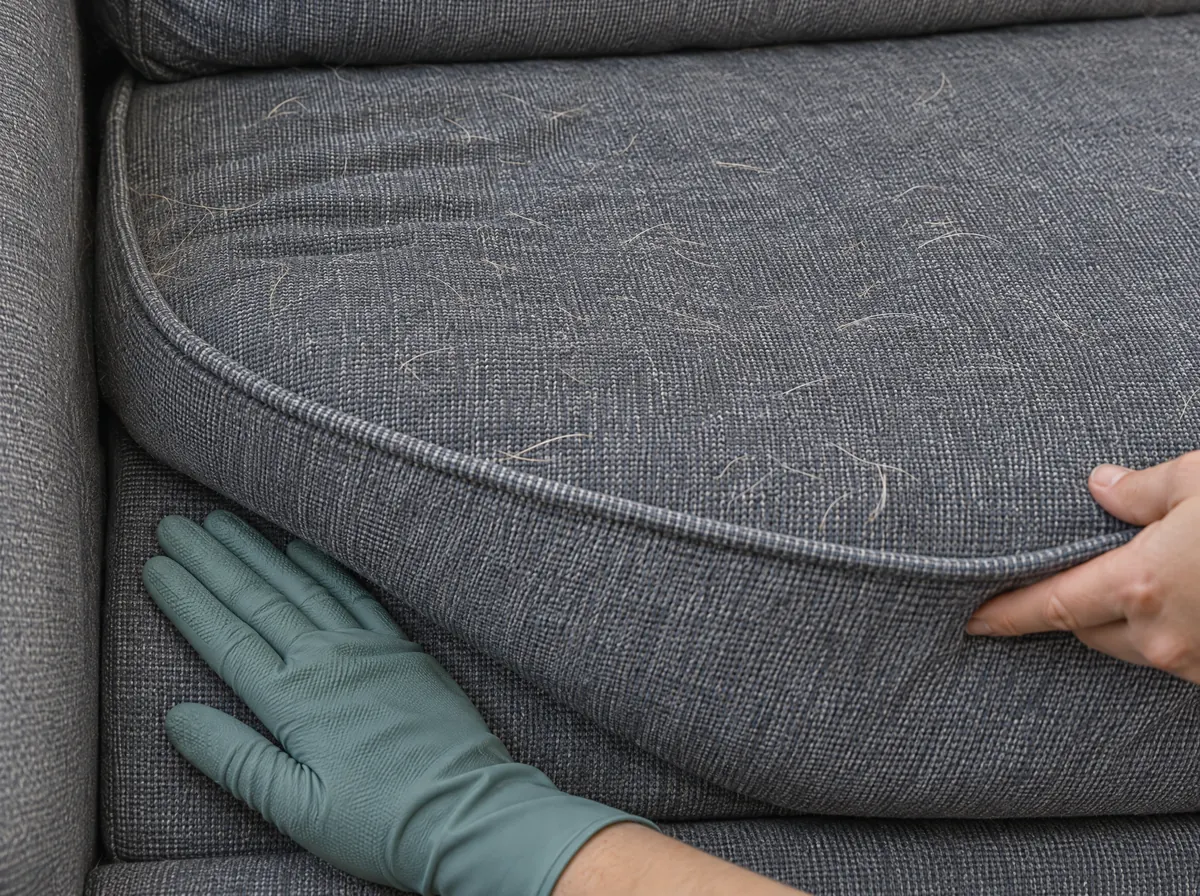
2. Gather the hair into a small strip
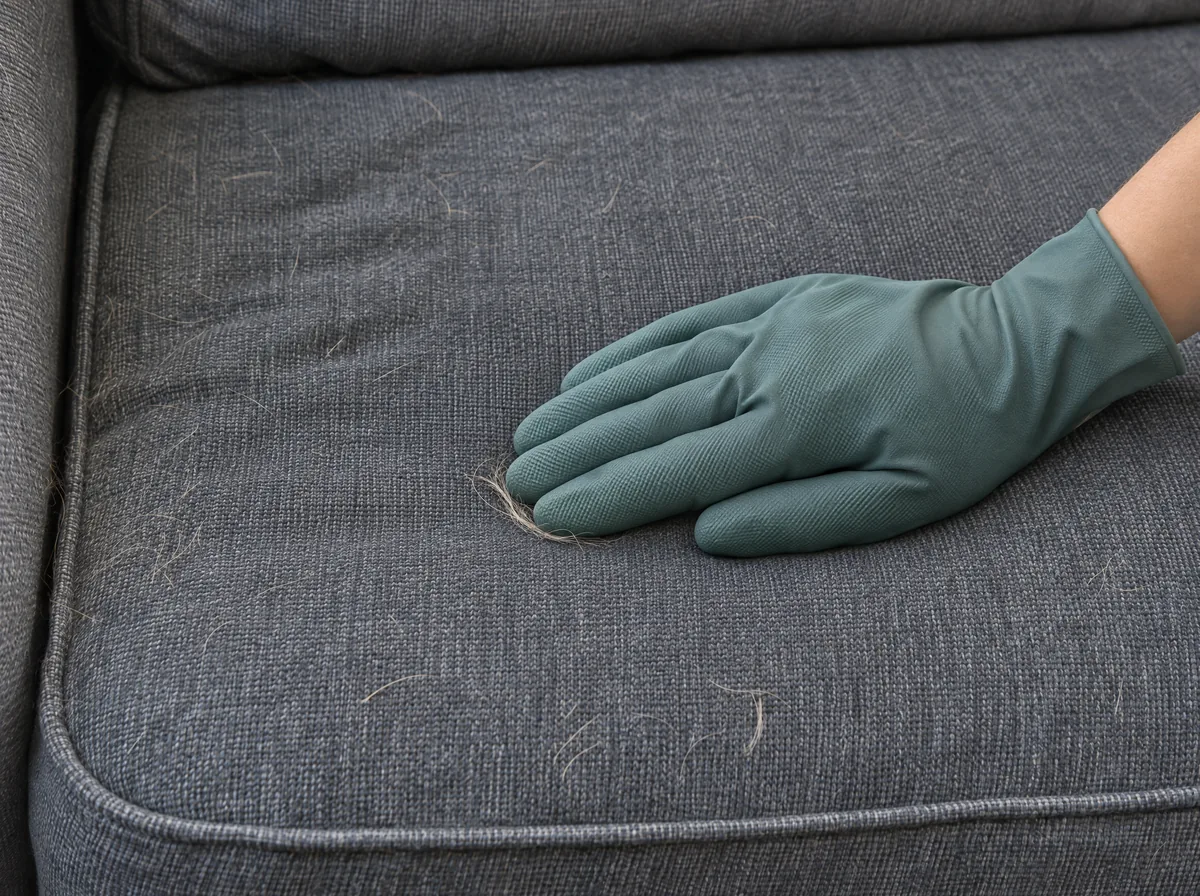
Work on a patch about the size of your palm. Draw the glove gently across it, then lift your hand before starting the next stroke. Work toward the same collection point so you can pick up the gathered hair.
Watch the hair at the leading edge of the glove. If it begins to collect, continue across the patch. If the fabric bunches or the glove catches, stop.
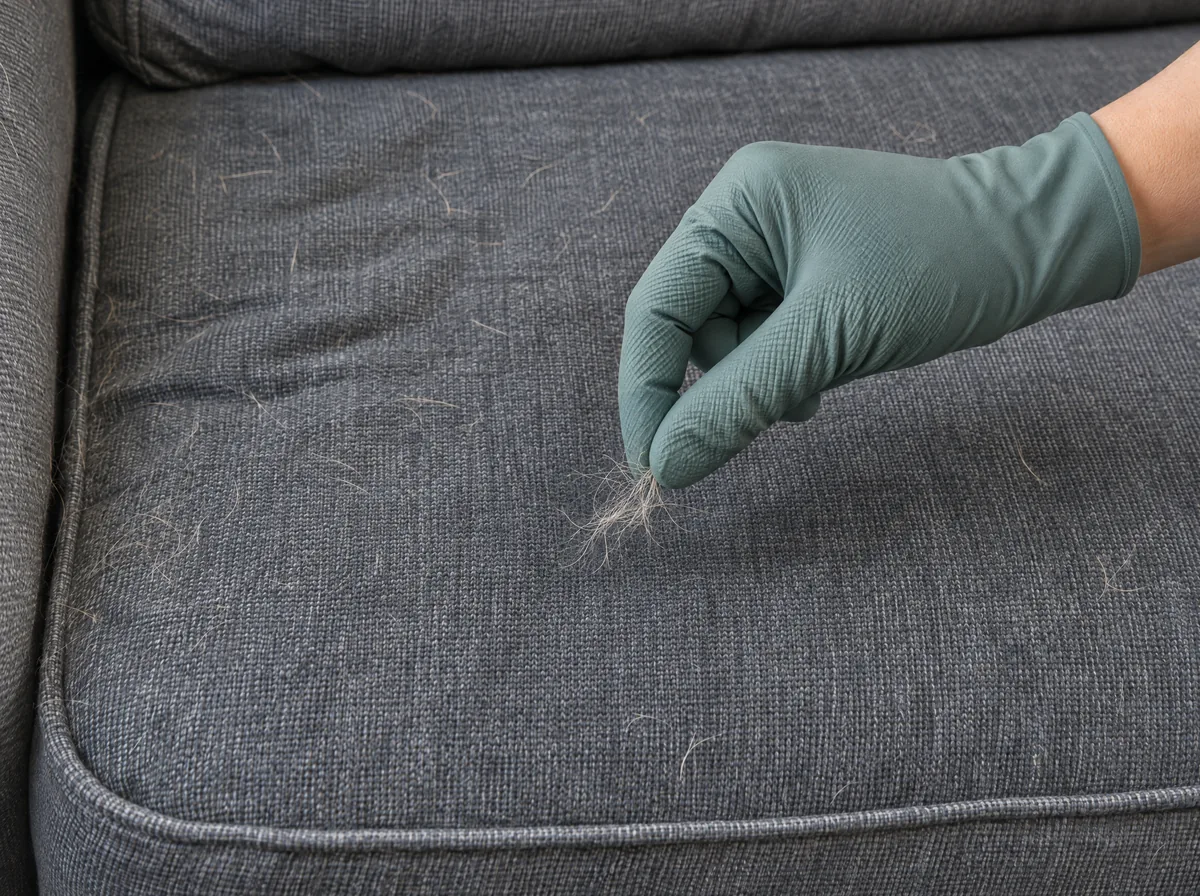
3. Lift the clump before moving on
Pick up the gathered hair and put it in the bin. Remove any hair clinging to the glove, then work on the next small patch. This keeps the loose pile out of your next stroke.
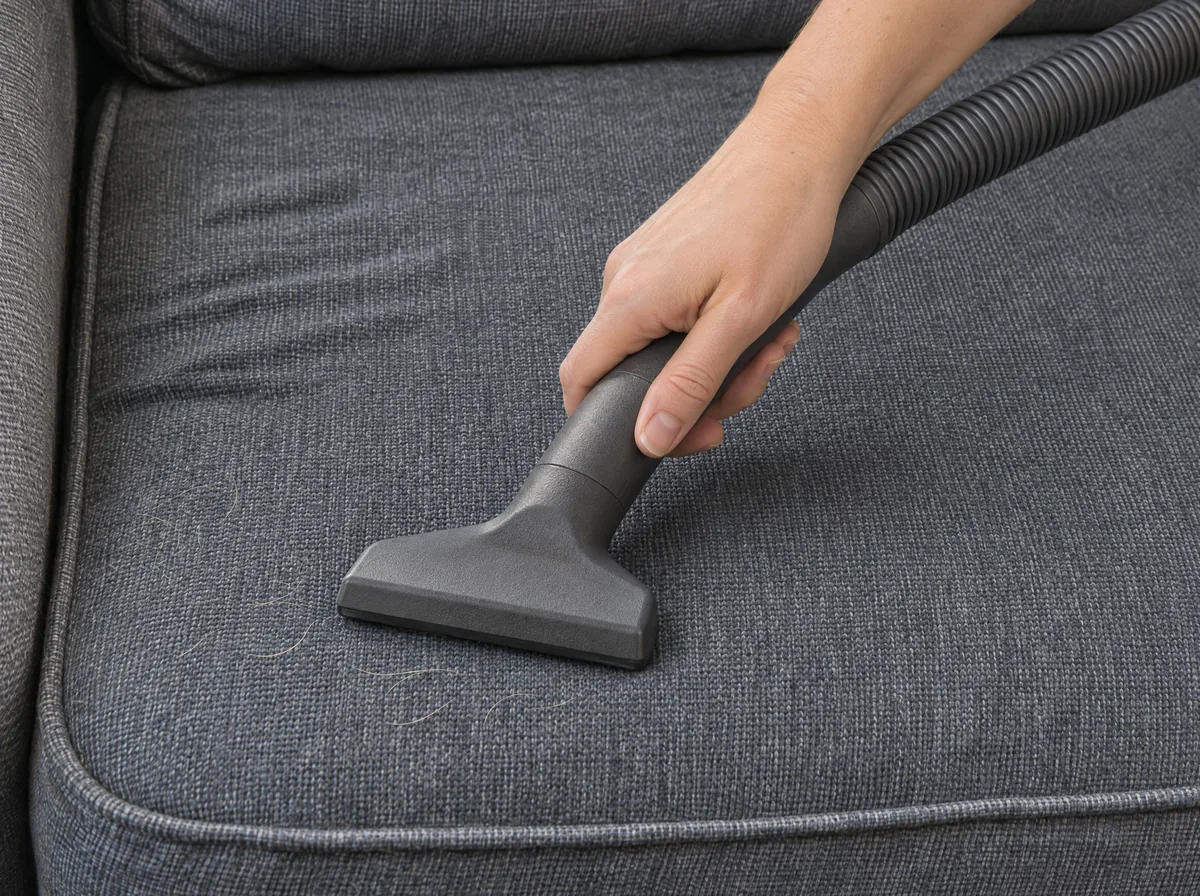
4. Finish with the upholstery attachment
Vacuum the treated area and its edges using the attachment and setting recommended for your sofa. Use a suitable crevice attachment for accessible gaps, without forcing it against the fabric. Different attachments serve different jobs; Dyson’s attachment guide illustrates upholstery and narrow-gap tools.
If your vacuum’s powered brush has hair wrapped around it, read how to clear a vacuum brush roller before the next clean.
Check the result in the same light
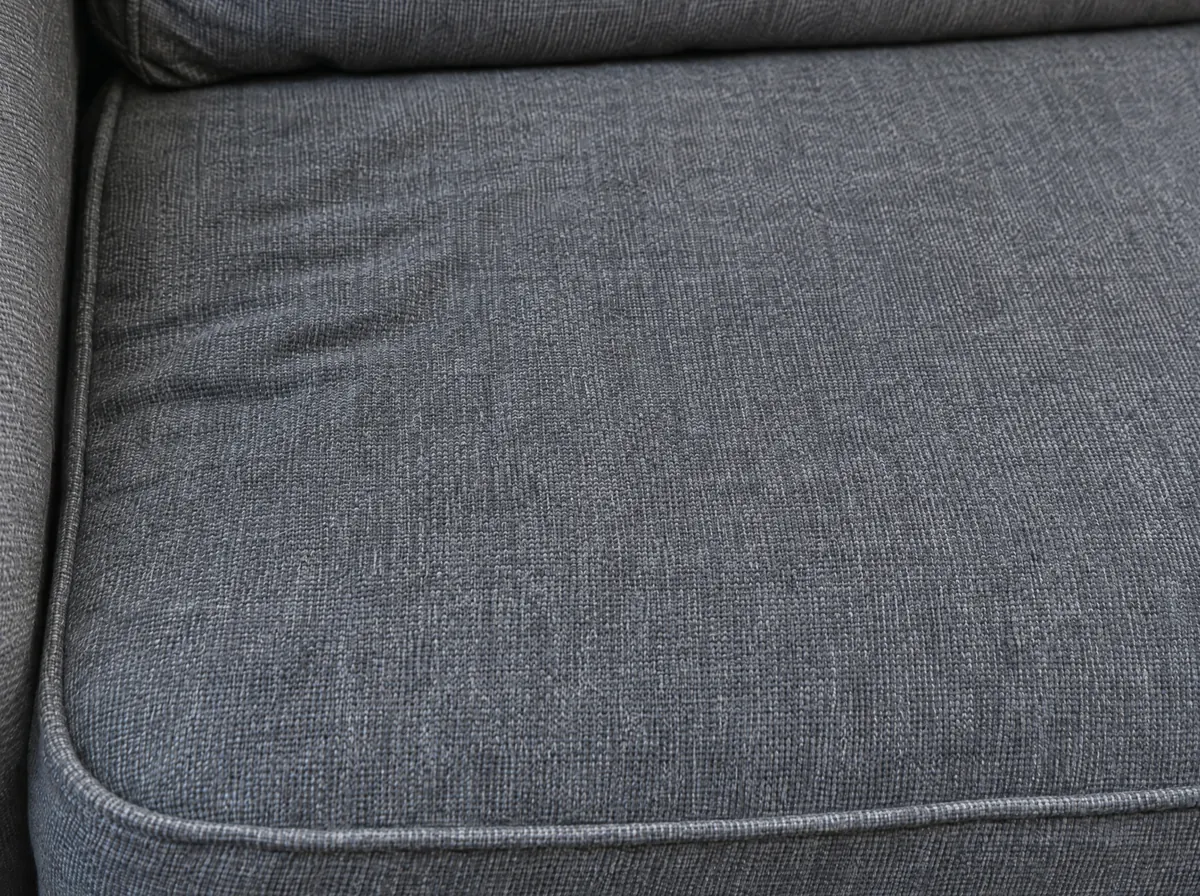
Look across the cushion from the angle where you first noticed the hair. Check the weave as well as the remaining strands. The fabric should still have its original texture.
If little has changed, stop repeating the glove pass. Ask the furniture maker which pet-hair tool suits that upholstery. A few stubborn hairs are a better outcome than a damaged cushion.
For help with routine floors and reachable surfaces around the home, review what Standard Cleaning includes. Mention any sofa-care request when you request an online estimate so its scope can be discussed before a visit.