You rinse the sink and it looks clean. By the time you put the dishes away, the same pale rings have reappeared around the drain. When hard water dries, dissolved minerals can stay behind in the outline of each droplet. Another splash of water can hide those outlines long enough to fool you. The U.S. Geological Survey explains what makes water hard.
On a plain brushed stainless steel sink, start with dish soap, rinse, then towel one spot completely dry. If the chalky edge is still there, try the mineral-removal method approved for your sink. That one dry patch will tell you whether it’s worth treating the whole bowl.
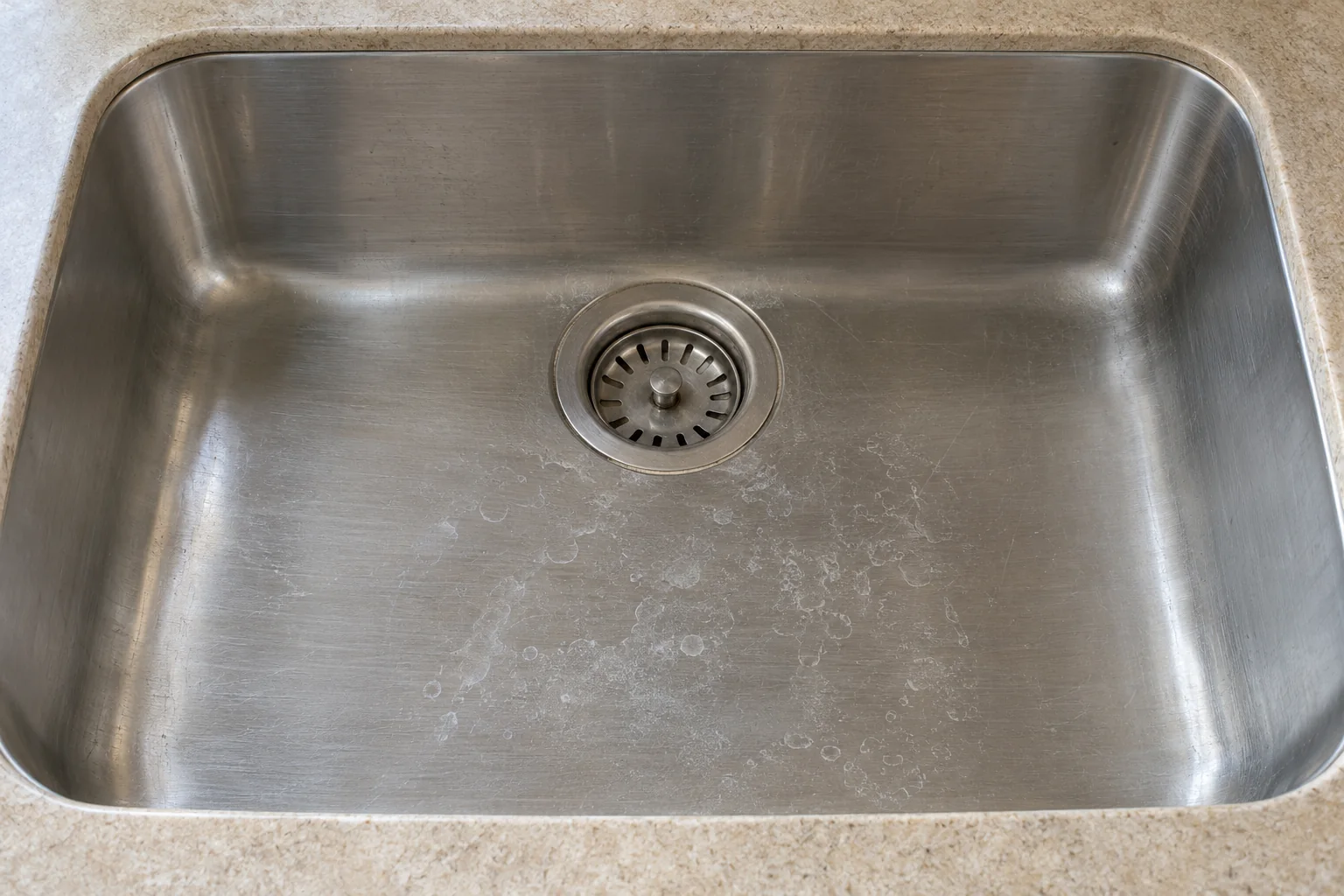
1. Read the mark in a dry sink
Set the dishes and removable sink grid aside. Choose a pale mark about the size of a coin. Look at it from the side, then look at the steel just beyond it.
- Pale droplet outlines or a chalky tide line suggest mineral buildup, especially where water tends to sit.
- A greasy smear that moves under a damp cloth is a good reason to start with dish soap. Rinse and dry before deciding whether anything else needs attention.
- A narrow groove that crosses the grain may be a scratch. If the surrounding haze lifts but the line stays put, leave the line alone. Harder scrubbing can leave a shiny patch around it.
This walkthrough is for an uncoated, brushed stainless basin. For a colored or coated sink, find the model’s care sheet before using a mineral remover. The same goes for a faucet that happens to match the sink. If yours is chrome, our guide to water spots on chrome faucets covers that finish.
2. Find the grain and wash the test patch
Look at a dry part of the bowl with light coming across it. The fine, evenly spaced lines show which way the steel was brushed. Follow the lines on the part you’re cleaning. They’re easier to see on a flat stretch than in the curve beside the drain.
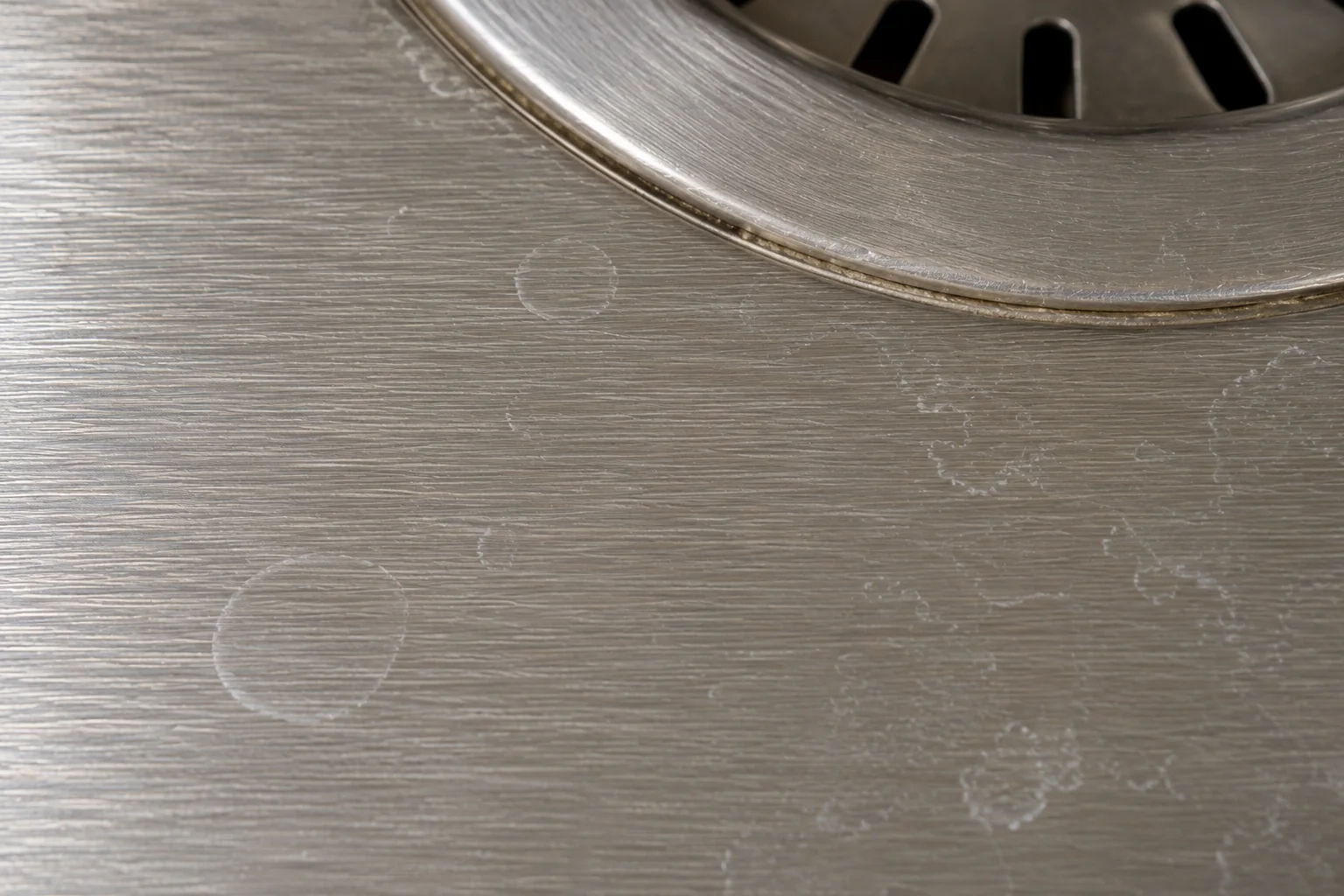
Put a drop of mild, ammonia-free dish soap on a damp, soft sponge. Wipe the patch gently along the grain. Rinse with lukewarm water and dry with a clean microfiber towel. If the ring has gone, finish the rest of the bowl the same way. Leave the steel wool and the rough side of the sponge out of this job. BLANCO’s stainless steel care guide shows how to work with the brushed finish.
3. Treat a mineral ring that survives washing
Check the care directions for your model. For example, Kraus recommends vinegar on a soft cloth for mineral deposits on its stainless steel kitchen sinks. If your maker allows household white vinegar, follow its directions for dilution. Wet a corner of a clean cloth with the approved solution and wipe gently along the grain over your chosen ring. Keep the cloth inside the bowl and off the countertop. Kraus gives its method under Stainless Steel Kitchen Sinks.
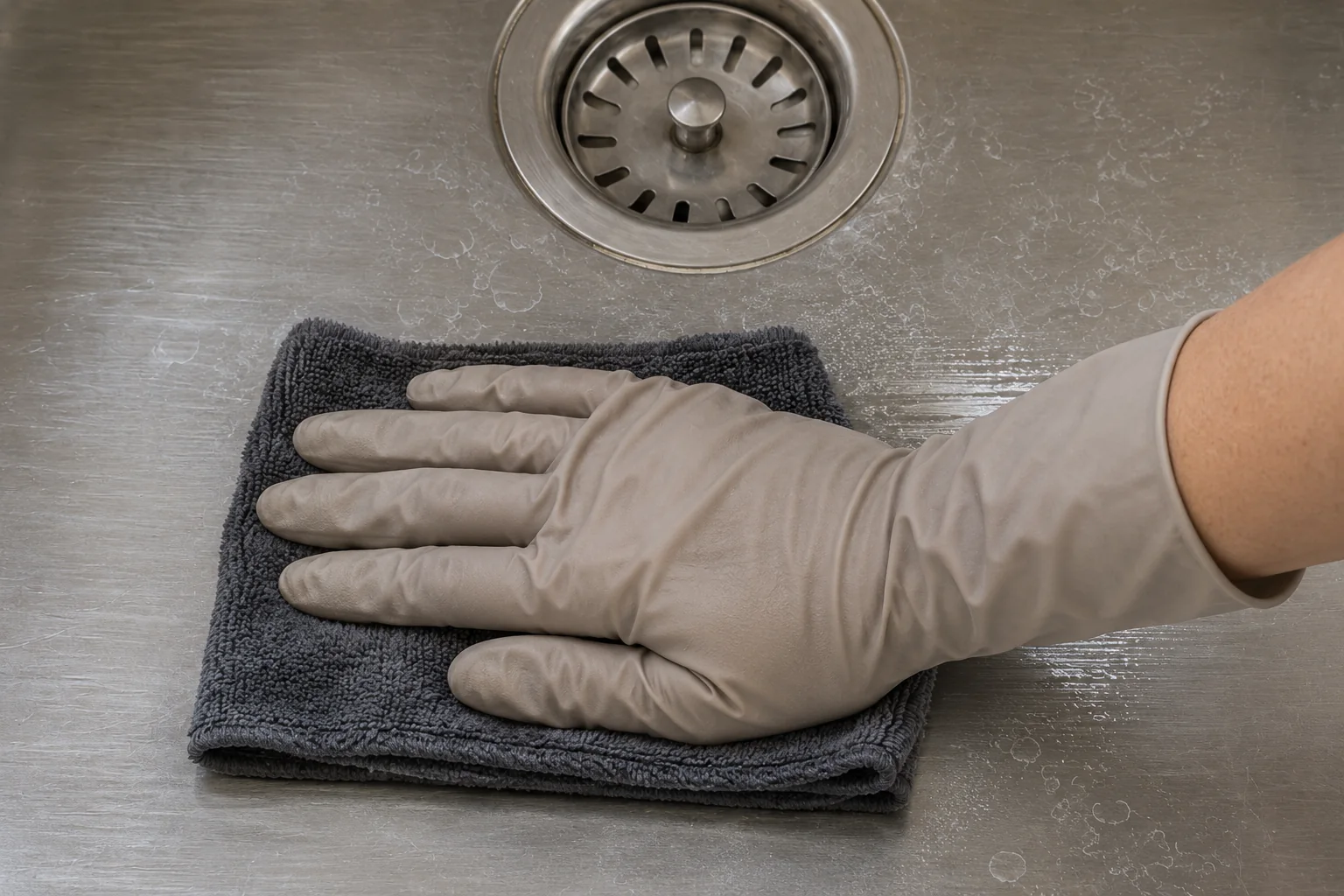
Rinse the patch and towel it dry. Skip the vinegar if you can’t confirm it’s suitable for the finish. Never mix vinegar with bleach or another cleaner.
4. Check the result before doing the whole bowl
Look at the dry patch from the same angle as before. Has the white edge faded compared with the ring beside it? If so, work across the remaining spots a few at a time. Rinse thoroughly and finish with a fresh, dry section of the towel. If the mark hasn’t changed, stop there and check the maker’s advice for that particular mark before trying anything stronger.
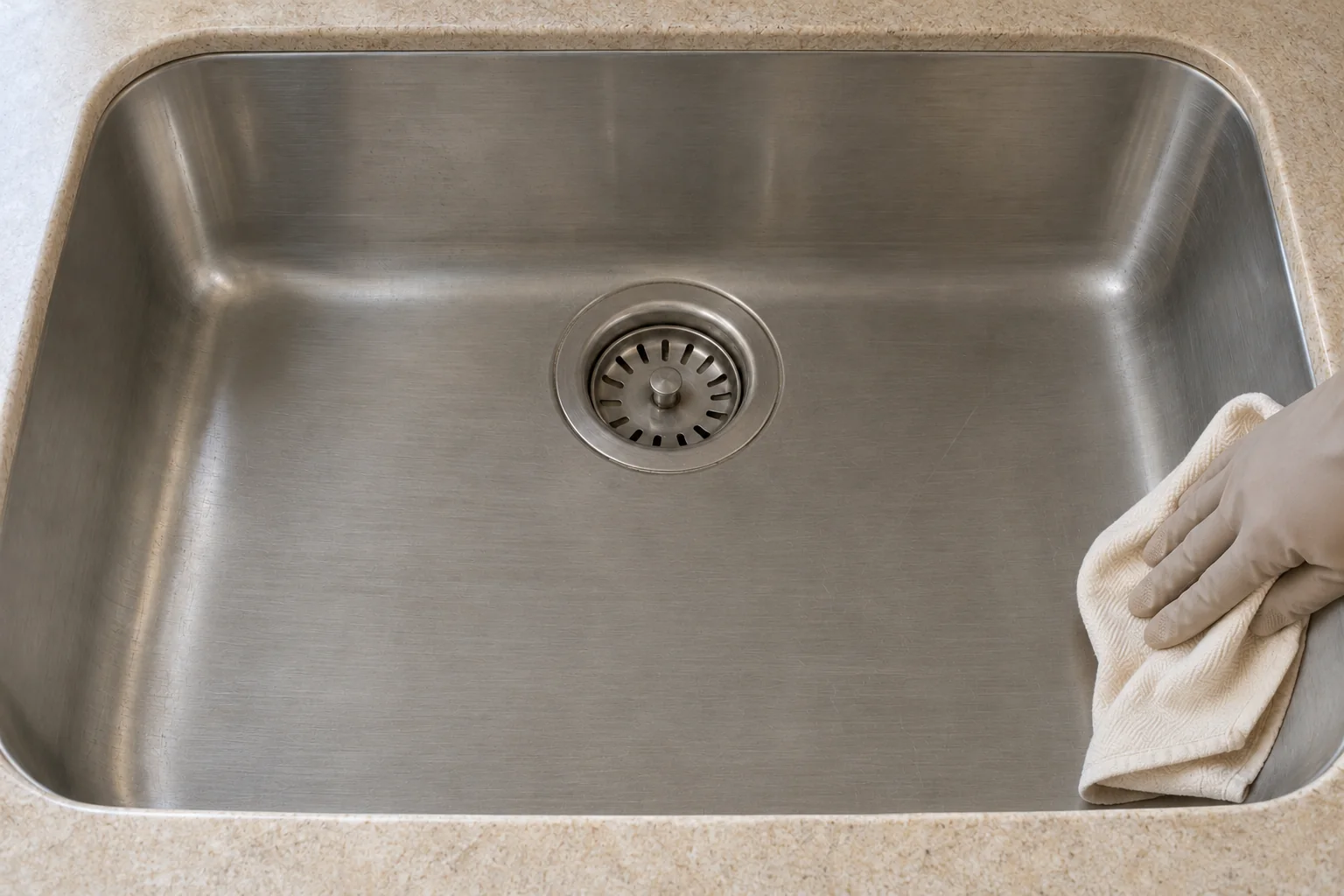
After the last dishes of the evening, lift the grid and dry the little puddles that collect around its feet and the drain. Those are easy places to miss when you wipe only the sides. If you’re planning a cleaning visit, the kitchen section of our standard cleaning checklist spells out which parts of the sink and surrounding work area get routine attention.